
Our Mission
We advocate, design and facilitate inclusive education, African Diaspora engagement with Africa, and sustainable development of organizations and communities .
Our Commitment and Approach
At IPIED, we believe inequalities and inequities in access to quality education, as well as the challenge of under-development and uneven development within and between countries can be more effectively and sustainably tackled through goal-oriented, value-driven collaborative partnerships undergirded by the melioristic principle – the world can be made better by human effort.
We believe meaningful engagement of the African Diaspora with the continent has enormous potential to transform Africa’s education, economy and empower the Global Africa sustainably. Hence IPIED spearheaded the conceptualization and the founding of the Historic African Diaspora Placement Program (HADIP) with the co-founding partners: African Capacity Building Foundation (ACBF), the Directorate for Citizens and Diaspora Organizations of the African Union (CIDO), the African Union Mission to the United States, and the Africa-America Institute. HADIP is a pan-African initiative for facilitating sustainable professional and cultural engagement of African Diaspora professionals and institutions in the United States with Africa.
We believe that disparities, blights in education, under-development and uneven development are better tackled through responsively designed multidisciplinary and multicultural strategies.
We believe conscientious partnerships have the ability to harness needed expertise from the World’s Pool of Expertise to solve the World’s Problems in any part of the world.
None of us, including me, ever do great things. But we can all do small things, with great love, and together we can do something wonderful.
– Mother Teresa
Our Founder
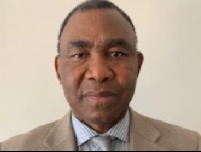
Reginald Nnazor is the founder and president of the International Partnership for Inclusive Education and Development (IPIED). He led IPIED to spearhead the conceptualization and the founding of the Historic African Diaspora Placement Program (HADIP) with the co-founding partners: the African Capacity Building Foundation (ACBF), the Directorate of Citizens and Diaspora Organizations of the African Union (CIDO), the African Union Mission to the United States, and the Africa-America Institute (AAI). HADIP is a pan-African initiative for facilitating sustainable meaningful and impactful professional and cultural engagement of African Diaspora professionals and institutions in the United States with Africa.
Nnazor was a professor and dean of the College of Education at Central State University (CSU). While at CSU he served on the Dayton Public Schools Family and Community Advisory Board, was a member of Ohio Deans Compact on Exceptional Children and Ohio University Education Deans.
Previously, Nnazor was a professor and chair of the College of Education at the University of Maine Presque Isle (UMPI). While at UMPI he served on the Maine 21st Century Advisory Council, the Executive Committee of the Central Aroostook Council on Education (CACE), and the Maine Professional Development Community of Practice.
Earlier in his career in academia Nnazor served as associate professor and chair of the Department of Educational Administration and Counseling at Fort Hays State University. The Department offered graduate programs in school administration, school counseling, community counseling, and higher education. He also held faculty and academic leadership positions at Kentucky State University.
Nnazor earned a Ph.D. in Higher Education from the University of British Columbia, a Master’s degree in Educational Administration from the University of Victoria, and a Bachelor of Arts in English/Education from the University of Nigeria. He has published and presented papers on teacher education, international education, inclusivity and equity, cosmopolitan curriculum, R&D and Innovation, accreditation and quality assurance, educational technology, distance education, and adult education.
He is a member of the Society for International Development-Washington DC; Madison Committee on Foreign Relations; Wisconsin Association of International Educators; and the Rotary International.